When a hidden leak threatens your building, you need specialists who can find the exact problem without unnecessary demolition. We combine advanced detection technology with systematic diagnostic methods.
We locate the leak scientifically before any demolition begins
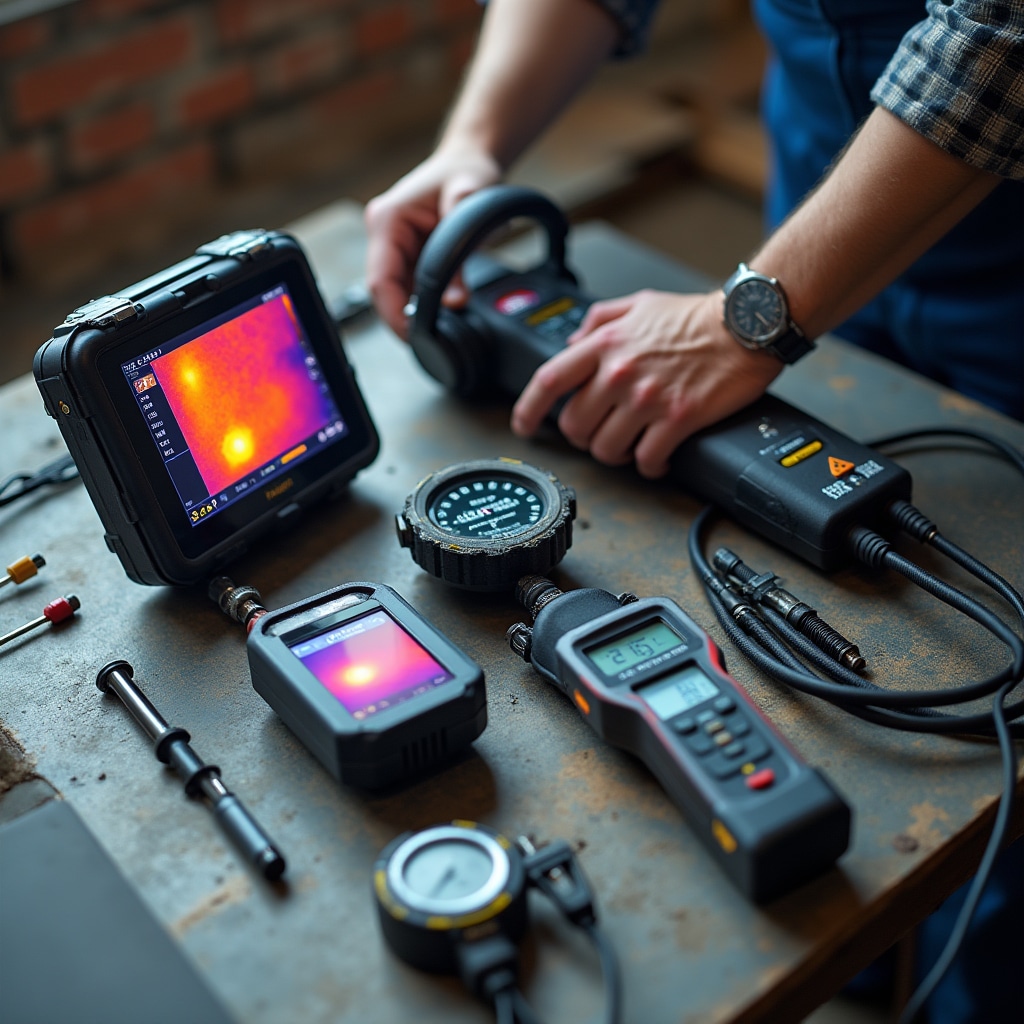
Traditional plumbers break walls progressively until finding the leak. This exploratory demolition approach creates extensive damage and high restoration costs. Our diagnostic equipment locates the leak precisely before any wall is opened.
The thermal imaging camera costs more than a typical plumber's entire tool collection. The acoustic detection system is even more expensive. But this investment means your wall gets opened in one precise spot, not five wrong ones.
You pay for the diagnostic service, but save significantly on reduced demolition and restoration work. The total project cost is lower, and completion time is faster.
Vertical construction creates unique challenges that require specialized knowledge
Water pressure increases approximately 1 bar per 10 meters of elevation. A fitting that works fine on the 10th floor may fail under pressure on the 2nd floor. We account for these pressure differentials when diagnosing leak sources.
Water follows gravity and finds the path of least resistance. A leak on floor 12 might travel down inside the wall cavity and appear as damage on floor 9. We trace symptoms back to the actual source location.
Vertical pipe runs experience significant thermal expansion and contraction. Hot water supply lines can expand several centimeters over multiple floors. This movement stresses joints and connections differently than in single-story buildings.
Once we've located the leak precisely, we make the smallest opening necessary to access and repair it. This surgical approach preserves surrounding materials and reduces restoration work.
A typical exploratory approach might involve removing an entire wall of tiles to find a leak. Our method opens a 30cm square section at the exact leak location. The difference in restoration cost and time is substantial.
This approach requires confidence in the diagnostic results. We don't open walls unless we're certain about the leak location. The equipment investment makes this precision possible.
How we narrow down leak location from entire building to specific pipe joint
We document all visible damage, moisture patterns, and resident reports. This establishes the general area of investigation and helps identify whether the leak is supply line, drain line, or rainwater system.
Using building plans and valve locations, we isolate different sections of the plumbing system. Pressure testing each isolated section reveals which pipe run contains the leak.
Thermal imaging scans the suspected area to identify temperature anomalies. Water-saturated building materials show distinct thermal signatures that reveal moisture location within walls.
With the system pressurized, acoustic sensors detect the sound of escaping water. This narrows the location to a specific meter of pipe run, identifying which joint or section is failing.
Before opening the wall, we verify the leak location using multiple detection methods. Thermal, acoustic, and moisture readings must all indicate the same location before demolition begins.
With confidence in the exact leak location, we make a precise opening. The first opening is the right opening—no exploratory demolition, no trial and error.
Transparency about what our equipment can and cannot do
Extremely slow seepage that only produces a few drops per hour may not generate enough thermal signature or acoustic signal to detect precisely. In these cases, we rely more on moisture mapping and may need slightly larger access openings.
Some older buildings have multiple wall layers with air gaps between them. This can diffuse thermal signatures and make acoustic detection more challenging. Additional investigation time may be required in these structures.
Leaks that only occur under specific conditions (high water use, heavy rain) may not be detectable during our investigation visit. We may need to schedule inspection during conditions when the leak is active.
We explain these limitations during the initial assessment. Transparency about what we can detect helps set realistic expectations and prevents misunderstandings.
Hidden leak investigations often require coordination with multiple parties—building administration, affected residents, insurance companies, and restoration contractors.
We provide detailed documentation throughout the diagnostic process to support insurance claims and administrative decisions. Thermal images, acoustic readings, and pressure test results create a clear record of the investigation.
Building administrators appreciate this documentation because it justifies repair decisions and supports cost recovery efforts when leaks originate from specific units or common areas.